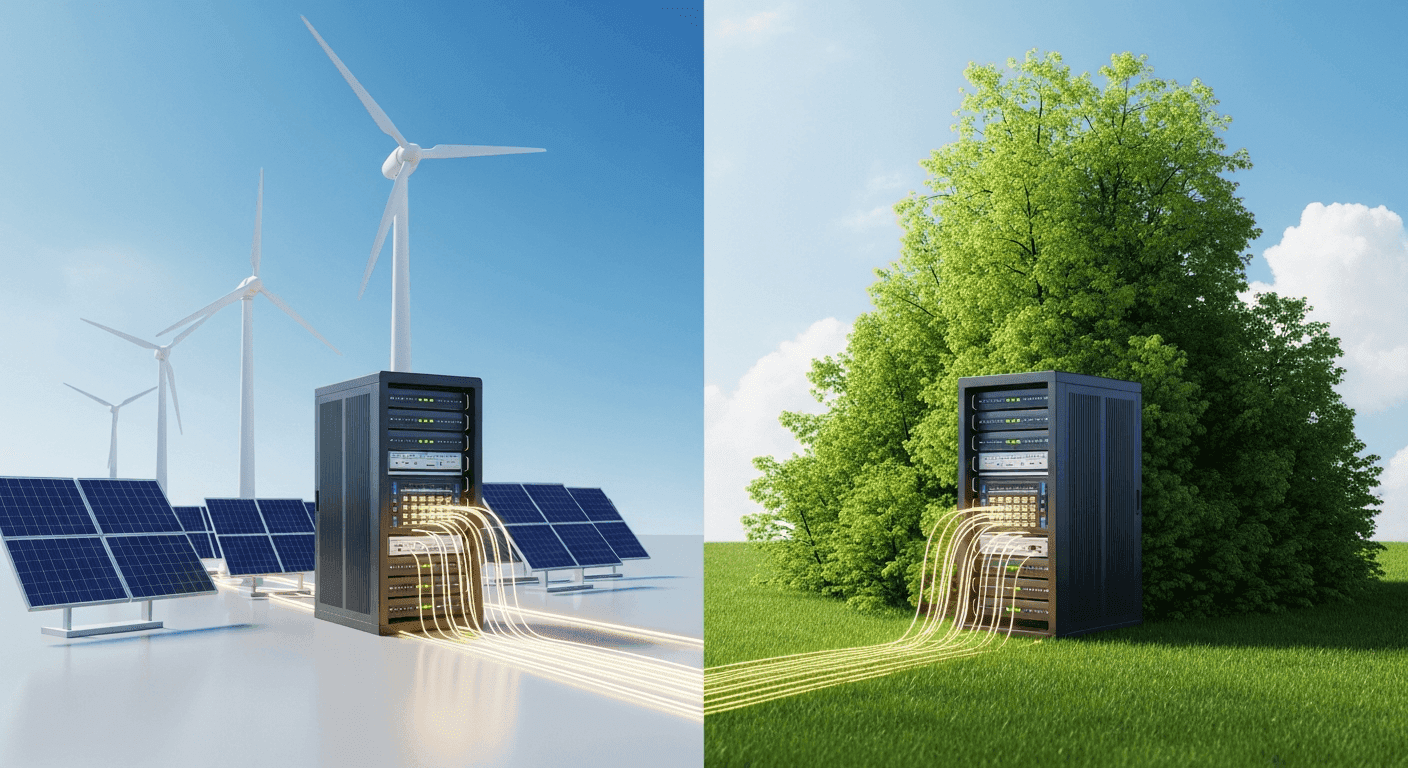
As the digital world expands, so does its energy footprint. Every website, email, and online transaction relies on physical servers that consume electricity, often generated from fossil fuels. This growing awareness has led to the rise of 'green hosting' – a movement aimed at reducing the environmental impact of web services. But not all green hosting is created equal, and understanding the different approaches is key to making an informed choice for your website.
Two primary methods stand out in the green hosting landscape: directly powering operations with renewable energy, and mitigating emissions through carbon offsets. Both aim to achieve a more sustainable internet, but their mechanisms and the efficacy of their environmental benefits differ significantly. Let's delve into what each approach entails and how they stack up.
What is Green Hosting?
At its core, green hosting refers to web hosting services that strive to minimize their environmental impact. This typically involves reducing energy consumption, using sustainable hardware, and, most importantly, addressing the carbon emissions associated with powering their data centers. The motivation behind green hosting is to counteract the considerable energy demands of the internet, which continues to grow exponentially.
For everyday users, choosing a green host is a straightforward way to contribute to environmental sustainability without needing technical expertise. It allows individuals and businesses to align their online presence with their values, supporting providers who are actively working towards a more eco-friendly digital future.
The Direct Path: Renewable Energy
Some web hosts commit to powering their operations directly with renewable energy sources. This means their data centers draw electricity from suppliers that generate power exclusively from sources like solar, wind, or hydropower. In some cases, hosts might even install their own solar panels or wind turbines, though this is less common for large-scale operations. The goal is to ensure that the energy consumed by their servers contributes zero or minimal carbon emissions at the point of generation.
This direct approach is often seen as the most impactful because it represents a genuine shift away from fossil fuels. By directly purchasing or generating renewable energy, these hosts are actively supporting the growth and stability of the green energy grid. It reduces the demand for traditional, carbon-intensive power generation, offering immediate and measurable benefits.
- Directly reduces reliance on fossil fuels for data center operations.
- Supports the development and expansion of renewable energy infrastructure.
- Provides clear, traceable evidence of sustainable energy consumption.
- Minimizes the carbon footprint at the source of electricity generation.
- Contributes to a cleaner energy grid overall by increasing renewable energy demand.
The Offset Approach: Carbon Credits
Carbon offsetting is a different strategy. Instead of directly using renewable energy, hosts calculate their carbon emissions from their energy consumption and then purchase 'carbon credits.' Each credit represents a reduction or removal of a certain amount of greenhouse gases from the atmosphere, often equivalent to one ton of carbon dioxide. These credits fund projects that prevent or absorb emissions elsewhere, such as reforestation, renewable energy projects in developing countries, or methane capture facilities.
The idea behind carbon offsets is to balance out the emissions produced. If a host emits X amount of carbon, they fund projects that prevent or absorb X amount of carbon, theoretically achieving 'net-zero' emissions. This approach doesn't change the source of the energy powering the data center itself, but rather compensates for its impact by investing in environmental initiatives globally.
Direct vs. Indirect Impact
The fundamental difference lies in the nature of their impact. Renewable energy hosting offers a direct, 'in-house' solution, immediately reducing the carbon intensity of the power grid segment it draws from. It's about preventing emissions from occurring in the first place for that specific energy use. This approach is often seen as more robust because it directly contributes to the transition to a low-carbon economy.
Carbon offsetting, on the other hand, is an indirect solution. It allows a company to continue using conventional energy while funding efforts to reduce emissions elsewhere. While valuable, the effectiveness and integrity of carbon offset programs can sometimes be debated. Factors like the 'additionality' of a project (would it have happened without the carbon credit funding?) and the permanence of the carbon reduction are important considerations that can influence the real-world impact of an offset.
Choosing the Right Green Host
When evaluating green hosting providers, understanding their approach is crucial. If a host claims to be green, inquire about their specific methods. Do they purchase Renewable Energy Certificates (RECs) or directly source renewable power? Or do they primarily rely on carbon offsets? Many providers employ a combination of both strategies to achieve their sustainability goals.
For those seeking the most direct environmental contribution from their web hosting, providers with a strong commitment to directly sourcing renewable energy might be the preferred choice. However, carbon offsetting remains a valid and important tool for climate action, especially for emissions that are difficult to eliminate entirely. A provider transparent about their methods and committed to verified projects demonstrates a serious approach to sustainability.
Both renewable energy and carbon offsets play a role in the broader effort to make the internet more sustainable. Renewable energy offers a direct path to reducing emissions at the source, while carbon offsets provide a mechanism for mitigating unavoidable emissions through external environmental projects. As a website owner, your choice between these approaches, or a combination of both, reflects your commitment to a greener digital future. By asking the right questions and understanding the efficacy of each method, you can make an informed decision that truly benefits the planet.
Sources & Further Reading
- Green computing — Wikipedia
- Renewable energy — Wikipedia
- Performance — web.dev